Examining the long-lasting impact of Faces of Death, the “forbidden” video store staple that shaped (and traumatized) an entire generation
Some movies have a powerful reputation even though only a relatively small pool of the general filmgoing public have ever seen them. Then, there’s Faces of Death.
For example, the original Texas Chainsaw Massacre from 1973 is STILL regarded as the cinematic bloodbath to end all cinematic bloodbaths to this very day, despite the fact it’s close to being a totally gore-less motion picture. And just hearing the words Pink Flamingos conjures up XXX-rated obscenities beyond comprehension to just about everybody EXCEPT the people who have actually watched it.
Perhaps the ultimate example, though, has to belong to Faces. Virtually everybody has heard of the movie but you’re not going to find many people in your day to day doings who have actually had the guts to sit through the verboten 1978 cult classic. Yet its reputation — or, at least what people THINK the movie is about — continues to waft in the cultural headwinds to this very day.
Talk to “normal” people about Faces of Death and they’ll probably tell you it’s wall to wall carnage for two hours straight. People eating monkey brains, people being eaten alive by alligators, actual electric chair execution footage. Imagine what Alex De Large had to suffer through when he was tied to the chair in A Clockwork Orange. Basically, that’s the popular (mis)conception of what Faces of Death is to the great masses.
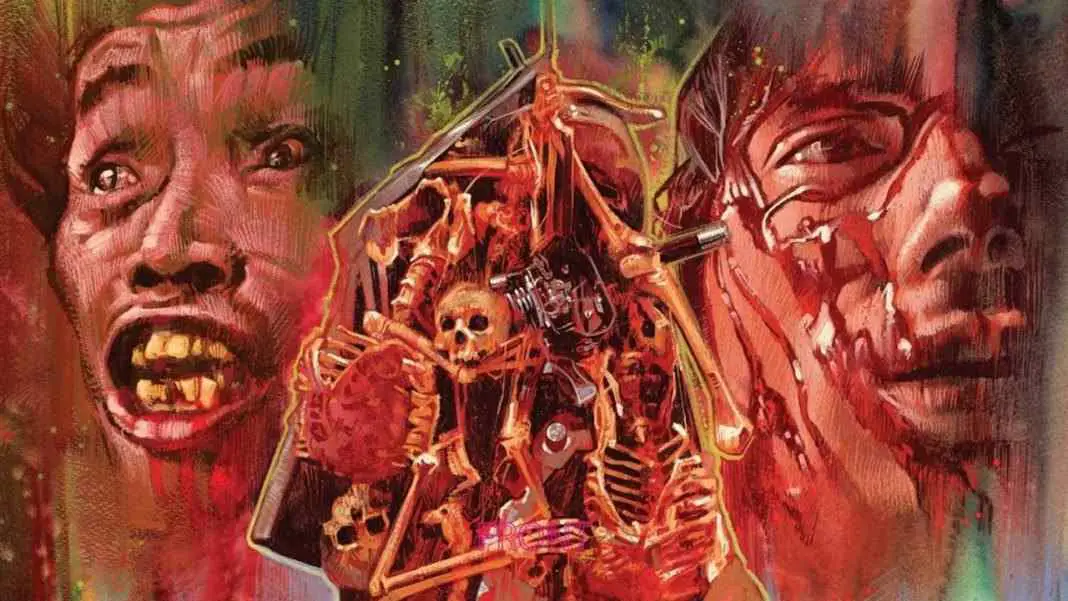
Of course, the movie suggests a medley of grotesque violence. The notorious VHS box art not only brags about containing scenes of “real” stomach-churning death and disease, it even boasts about being “banned” in more than 40 countries. The movie no doubt positions itself as a grim and grotesque spectacular, but is the film itself really the puke-your-brains-out exercise in second-hand degeneracy we’ve been hearing about for 50 years now?
Right off the bat, I can tell you that a lot of the Faces of Death mystique is coincidental, if not accidental. By the late 1990s there were tons of Faces of Death rip-offs — usually, with on-the-nose names like Traces of Death — that were indeed the genuine article. Those videos were totally legit, usually comprised of unaired news footage of horrific accidents, police crime scene video and the occasional viral-before-viral-was-a-thing-on-the-internet clips like the notorious televised suicide of Budd Dwyer. When people talk about Faces of Death today, there’s a very good chance they’re confusing it with one of those types of video cassettes.

The facts and fictions of Faces of Death
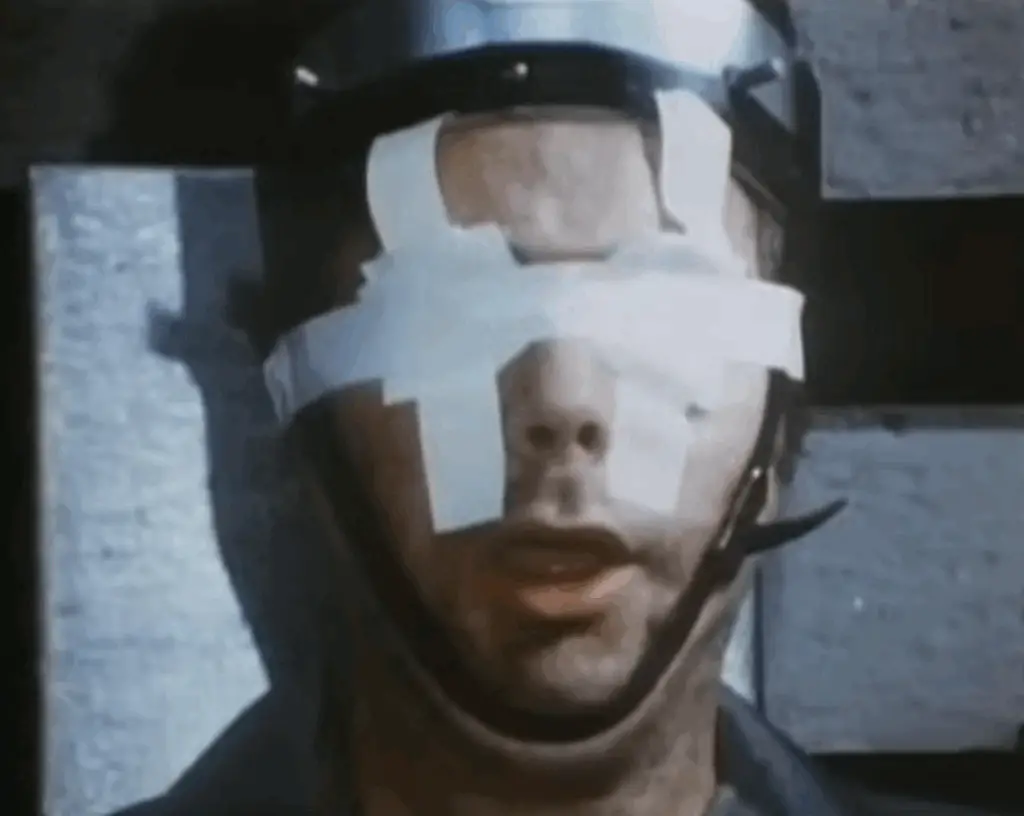
The original Faces, though, came out before VCRs were a ubiquitous product in American households. Legend has it the micro-budget documentary allegedly filmed for just $450,000 went on to gross — in more ways than one — in excess of $30 million in theatrical bookings alone. Indeed, Faces itself was just another “mondo” movie — part and parcel of a short-lived but immensely influential sub-subgenre of films in the ‘60s and ‘70s that were basically exploitation movies masquerading as National Geographic-like travelogues (or is it the other way around?) In most respects, there’s nothing that really distinguishes Faces from its forebears, such as Africa Addio, The Last Cry of the Savannah and the de facto format pioneer, Mondo Cane.
The difference, of course, is that Faces put its locus on the macabre front and center. The previous “mondo” movies were more interested in exhibiting the “exoticness” of non-Western cultures (with more than a few of them getting accused of racism in the process.) Faces, however, shoved the death’s head right under your nose; this wasn’t a film about culture or nature, it was a film about blood, guts and body parts getting strewn all over the place for real … allegedly.
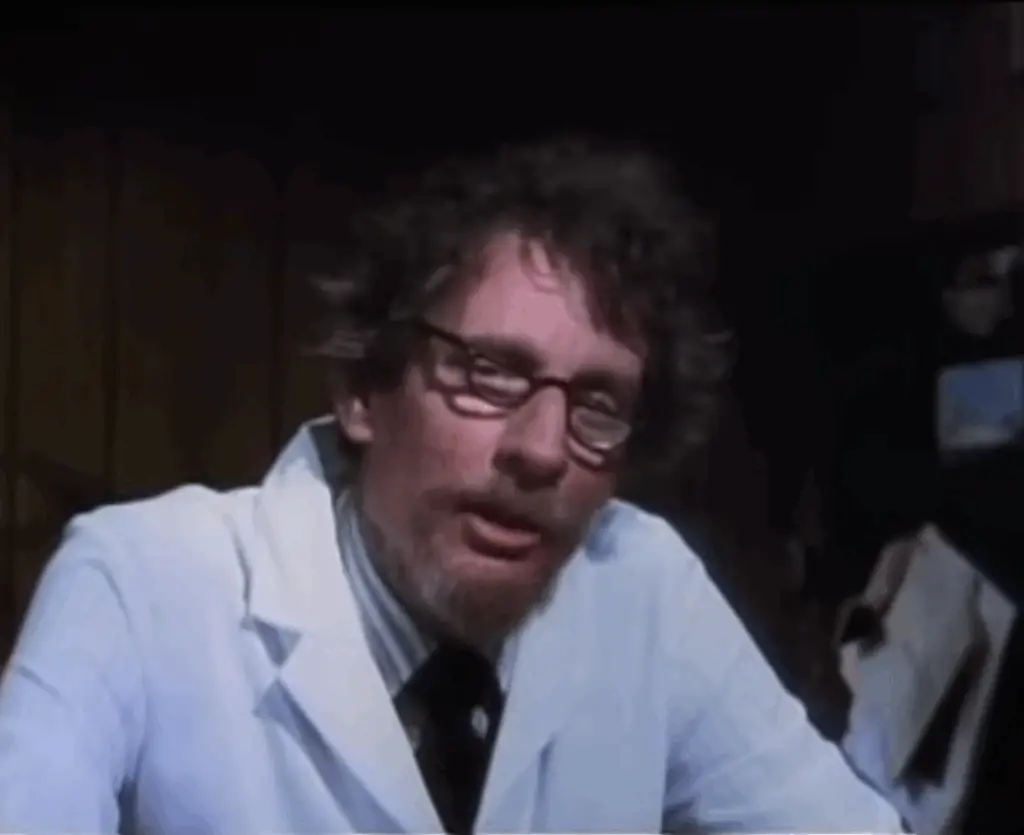
Again, those who have never actually seen the original ‘78 Faces might be surprised by the movie’s actual contents. Even compared to its direct sequels — which over time turned into what is tantamount to the necrophiliac version of America’s Funniest Home Videos — the original Faces feels oddly moody, artsy and, at times, impossibly poetic.
Whether director John Alan Schwartz was sincere in the messaging is debatable, but on a superficial level Faces at least SEEMS to be making something resembling a serious scientific, literary and artistic statement on human mortality. It is, after all, a movie that begins with a NatGeo-style compilation of real-life mummies and literally ends with an epilogue about ghost-hunters and footage of a smiling and cooing baby during its outro credits, complete with one of the WORST sounding hippie New Age ballads you’ll ever hear in your life. Needless to say, it’s not exactly the sociopathic vibe you’d get from trolling through the old Rotten website during the dial-up AOL years.
The contents of Faces, all these years later, is a bit harder to shake out than it appears. Obviously, MANY parts of the movie are egregiously faked and poorly staged. But other parts of the film are definitely authentic — the airliner crash footage perhaps being the most infamous. What the film ultimately becomes is this weird, Baudrillardian meta-commentary on cinematic violence, an uneasy jumble of make-believe death and actual death mixed up into a cocktail of half-assed political commentary and no-assed passive entertainment. Imagine watching a Chuck Norris movie that’s 90 percent cornball play-action and 10 percent honest to goodness school shooting footage. In “horror” terms, that’s pretty much what the original Faces constitutes.
A reality check?
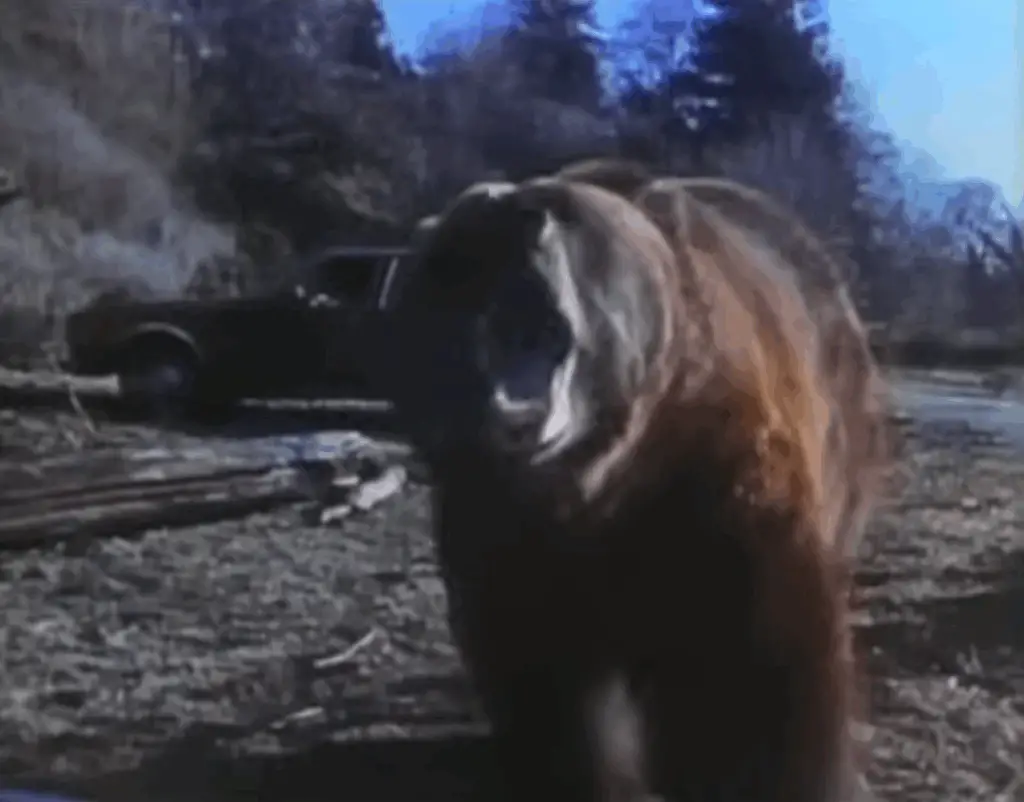
The cultural artifact of Faces, that being a snapshot of the late ‘70s spiritual zeitgeist, is a confusing topic to explore. You get some post-Vietnam talking points sorta espousing anti-war and pro-environmentalist policies, but at all of it is wrapped around a series of hardly convincing faux-snuff footage. It’s clearly a movie made before the abstract notion of Wikipedia ever possibly existing was a thing. A few quick Google searches completely breaks the fantasy of the movie, pending you ever get curious and try to look up all of the purported mass murderers and electric chair-bound prisoners name dropped in the film. The other efforts at faking reality are even more laughable. In one scene, a guy (allegedly) eaten by a wild animal appears to be holding a video camera … made out of a cardboard-like material.
But just when the movie lulls you into unintentional comedy thanks to its dated not-so-special effects, it turns right around and socks you in the kisser with real death and violence. That scene in the Los Angeles morgue, as one example, is totally authentic. Which begs the question: when you watch real death and violence sandwiched in between obviously fake death and violence, what in the hell are you supposed to feel as a human being?
And that, ultimately, is the key ingredient to the Faces aura. It’s a movie that puts us in a precarious place as filmgoers; we can’t simply close our eyes and say “OK, all of this crap is fake,” even when it’s dressed around absurdly acted facsimiles of devil worshipping blood orgies. And in some ways, that’s even more horrifying than knowing everything in the movie is totally legit.
Prophetic visions?
Nobody ever really calls Faces a “found footage” movie, although it definitely has the same central goal of something like Cannibal Holocaust or The Blair Witch Project — getting us to second-guess what is and isn’t real around us. In a very odd way, the movie almost portends our current situation with artificial intelligence; and here we’ve got Faces capitalizing on that blurring of reality and artifice a good half a century before ChatGPT existed.
The most obvious modern day parallel to Faces is stuff like LiveLeak, where we can witness all sorts of death, carnage and inhumanity with a few mouse clicks. We live in a technological state where any eight-year-old can find real life ISIS beheading videos online and every couple of months we get live news footage on our TV sets of bullet-riddled corpses being dragged out of elementary schools. There’s not really a market for something like Faces of Death anymore, simply because visions of actual death are so commonplace in our digital spheres of influence.
In 1978, there was a morbid allure behind Faces of Death, and even into the late ‘90s it felt like it was offering us something off limits, a sort of forbidden knowledge we weren’t allowed to witness.
And now, we’re bombarded with hospital bombings, mass shootings and dash cam footage of people getting murdered in cold blood … all wedged in between upbeat commercials for sinus medications and reruns of The Big Bang Theory.
Grim reality juxtaposed with artificial supra-reality. CNN and Fox News is doing it now. But Faces of Death beat all of them to the punch.