Halloween III showed a perfect willingness to move on from the story of Michael Myers. Producers John Carpenter and Debra Hill felt that if the franchise had to continue, the best course of action would be to do so as an anthology, telling different stories every year, only connected by the holiday itself. When that direction proved unsuccessful, the decision was made to return to the elements fans knew and loved: Doctor Loomis, Haddonfield, and of course Michael Myers. Had it not been for the combination of the lukewarm reception to Halloween III and the box office success of Halloween 4, it’s entirely possible that the shape may never have returned.
The Halloween sequels all attempt to do something new, even when they’re not always met with positive response, and even when the new directions aren’t as extreme or obvious as Halloween III. With the massive box office success of Halloween 4, especially compared to its predecessor, the decision was made to make a new Halloween as soon as possible. And that’s exactly what happened. Halloween 5 was released less than a year later. It was rushed and it feels like it. It’s an uneven, shaky movie, and isn’t generally celebrated as one of the best of the series.
But as uneven as it is, there are a lot of positives to be found in Halloween 5. Under the guidance of Swiss/French director Dominque Othenin-Girard, Halloween 5 has a distinctly more European feel than its predecessors. Many filmmakers, especially genre filmmakers, outside the US aren’t nearly as hard set on the three act structure that defines most American movies. The influence of that can definitely be felt in Halloween 5 to a very specific degree, even to the point that it doesn’t really feel or look like an American movie. But it doesn’t look like a Swiss or French one, either. Looking at all of the individual elements of the picture, from the structure to the mythology to the way it plays with tone, Halloween 5 most closely resembles an Italian giallo.
Related: Script to Pieces: Halloween 666: The Origin


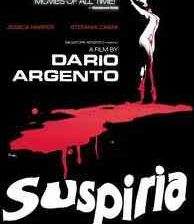
Many gialli actually involve psychic powers in some way, shape, or form, often as a major plot point. The films of Dario Argento and Lucio Fulci are particularly known for this. Both Deep Red and Phenomena hinge on characters with some degree of psychic potential. In Deep Red, a woman receives a precognitive vision of her own death while giving a public demonstration of her abilities. In Phenomena, the lead character has the ability to sort of communicate psychically with insects, which is a major part of the feature and often plays to her advantage.
The psychic link between Michael and Jamie doesn’t feel out of place in this context. Stories of psychic phenomena at the time often linked the power to children, in particular children who had experienced some kind of trauma. This is a frequently reoccurring theme in the work of Stephen King. Carrie White’s power manifested on instinct when her mother tried to kill her the moment the child was born, and once again when her mother was abusive when Carrie was a little girl, causing a massive hail storm. In The Shining young Danny Torrance’s abilities become more concrete after his father breaks his arm when he is three. While these are both American stories, they’re just a few of many examples of the time, and there is quite a bit of cross-pollination between the filmmakers of the U.S. and Italy when it comes to one influencing the other, especially in the ‘70s and ‘80s.
Related: Back to the ’80s: Halloween 4 and 5

Both influences stem from the fact that psychic phenomena was just a global fascination at the time, almost being taken as a form of popular science. Universities conducted tests into E.S.P. and writers and filmmakers—including Stephen King himself—simply accepted its existence without question. Argento had a fascination with the phenomena as well. While it’s abrupt that Jamie would suddenly have these abilities after no sign of them in Halloween 4, it does make sense in its own way in this context. After all, she doesn’t have E.S.P. or telekinesis, her psychic connection is limited to Michael himself. She can see what he’s doing, and feel it as well.
It almost suggests that there is an attempt on Michael’s part to use this connection to pull Jamie toward the darkness, but that’s a very American storytelling device, especially in a franchise that was already influenced by Star Wars with the infamous sister twist (that was ret-conned in the David Gordon Green trilogy). When Michael actually chases after Jamie, it’s clear that he intends to kill her. There’s no story reason for the connection between them, save to be an interesting idea. At no point is there an answer as to why this happening to her, because that’s what most of the best gialli do. They present things to make the audience ask questions, but there’s very rarely much interest in providing answers. A giallo film generally starts with a concept based in hard reality—usually the investigation to uncover the identity of a serial killer—and then explores that in the most surrealistic, dreamlike way possible.
By this point, the Halloween series had been moving further and further away from reality, so a giallo sequel does kind of make sense. Michael had always been a semi-supernatural killer and the influence of filmmakers like Argento and Mario Bava was clear, even in the original. Taking a more surreal approach isn’t without merit, even if it might logically stem from a rushed screenplay.
The unanswered questions of Halloween 5 don’t stop with Michael and Jamie’s psychic connection, after all. Far from it. There are so many things that are just thrown into the movie, major reveals and mysterious characters that were never meant to be explored, but are just there to keep the audience on the edge of their seat, having no idea where the film might take them next. Who is the Man in Black and what is his connection to Michael Myers? What does the tattoo on Michael’s wrist mean? In the context of this movie by itself, these things aren’t answered. We don’t know. And we’re not really supposed to. They’re just there to keep us guessing. Is the Man in Black a sinister figure watching over Michael or is he some nameless incarnation of abstract evil? Maybe neither. Maybe both. Ultimately, we can reach our own conclusions. Logic doesn’t matter, it’s not something Halloween 5 is focused on, Othenin-Girard is not providing clues or red herrings, he’s simply presenting ideas and images to make the audience question what they know and to provide a viewing experience in which it truly feels like anything could happen at any time.
Did You Know? Wicked Horror TV Has Classic and Independent Horror Films Available to Stream for Free!

The man in black on his own also represents a particular stylistic choice prevalent in so many giallo films. Countless gialli revolve around a mysterious killer dressed in black, often focusing on black gloves, whereas Halloween 5 instead focuses on this character’s steel-toed black boots. In his overall appearance, from his trench coat to his hat, the Man in Black certainly looks like a killer in a giallo—from what we see of him at least. Those wardrobe choices are almost identical to someone like the faceless killer in Mario Bava’s Blood and Black Lace.
All of these mythological ideas float in and out of the movie, apparently at random, mirroring the drastically fluctuating tone. Halloween 5 doesn’t look much like a giallo in terms of its aesthetic or cinematography, instead settling on a design that much more clearly evokes the gothic tones of the ’30s and ‘40s. This dark, stylistic atmosphere is off-set by the comedic elements, particularly the two bumbling police officers. Instead of a few jokes for levity, Halloween 5 really leans into these characters, even giving them their own wacky music whenever they enter or exit a scene. This feels much more akin to a giallo in its approach, having more in common with the scenes played for high comedy in Deep Red, especially the longer cut with an entire scene devoted to the protagonist forcing himself to fit into a very tiny car.
Whether intentional or not, Halloween 5 just feels like a giallo film in so many ways. The splatter’s a little more mean-spirited, there are so many elements introduced that don’t appear to have any narrative connection to one another. For a single feature, they might make things interesting. After all, they’ve already proven to be talking points for several decades. But that’s the problem with doing a giallo as the fifth entry of an ongoing franchise. Each of these new pieces are not necessarily meant to continue to build a puzzle, but rather to spill over the top of that puzzle in a pattern that is at least interesting to look at. When the franchise is passed along to the next filmmaker, it becomes their task to make sense of elements that were never intended to make sense to begin with.
It fell to the eventual Halloween: The Curse of Michael Myers to answer the questions that Halloween 5 had put forth. With the movie being a cliffhanger, ending with a shootout at the police station and Michael’s disappearance, those mysterious lingering elements were forced to become set lore and the series’ evolving narrative wound up having no choice, really, but to take a pretty extreme direction. Now that there are so many different timelines within the Halloween franchise, those more radical choices aren’t set in stone anymore. It’s a little easier to go back to Halloween 5 and just see it on its own terms. This is an oddball and experimental feature that tosses aside structure and narrative for a more dreamlike approach, telling the story through set pieces and loosely connected ideas rather than one singular through line.
We’ll always be able to look back on it as the Halloween movie that did whatever the hell it wanted. While not all of it worked, it is at least an interesting turning point in the franchise’s history and worth another look.