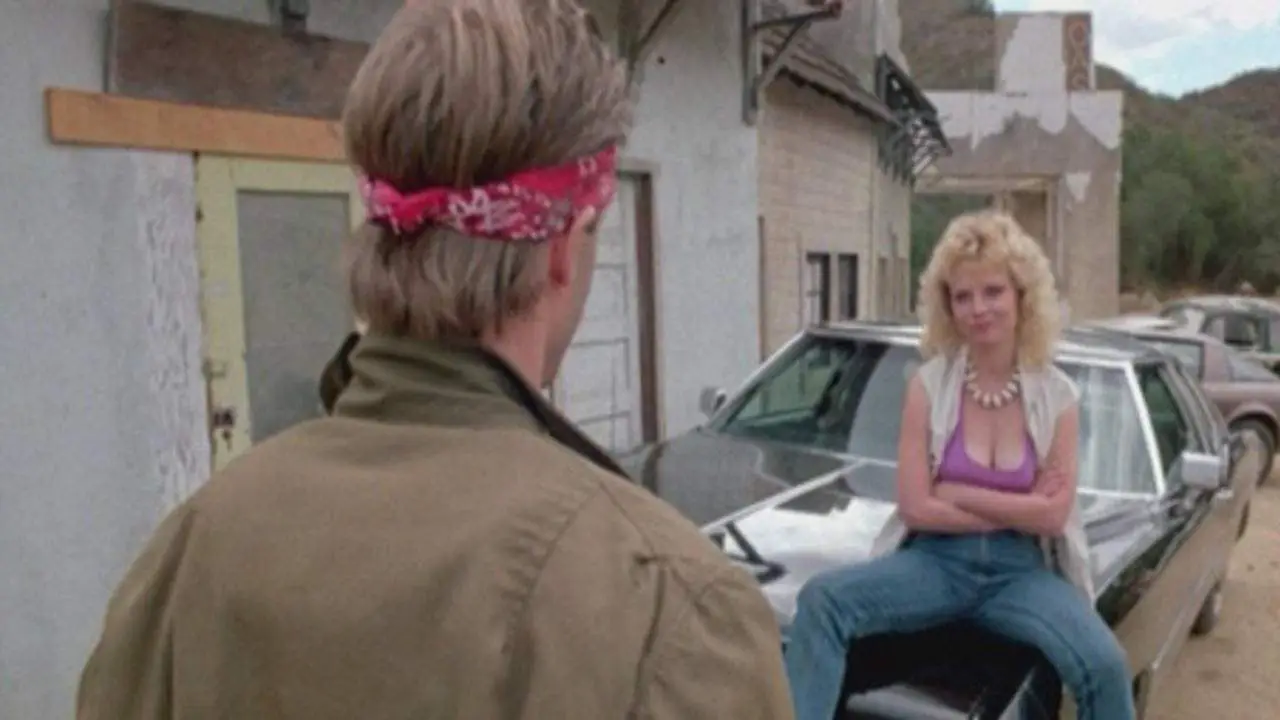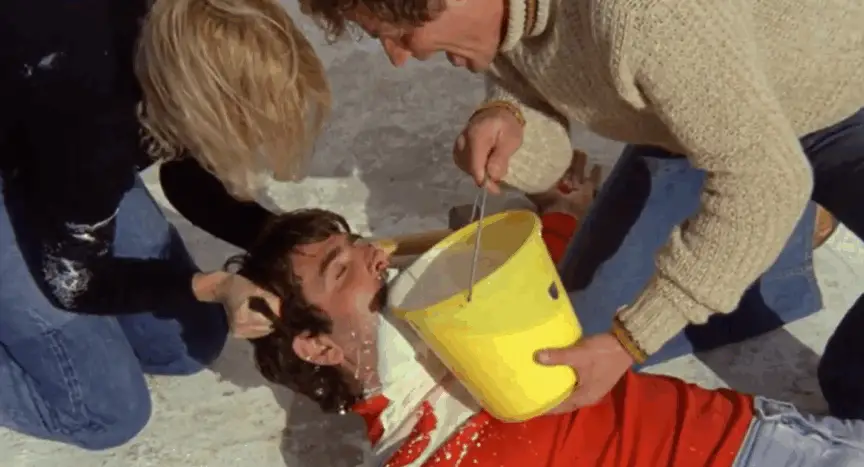
Paying tribute to Nico Mastorakis’ cult shocker Island of Death!
Island of Death is one of those movies that became an accidental political statement. Nico Mastorakis, the director of the still obscure Greek horror movie from 1976, said he never explicitly meant for his film to carry a pointed message about the hypocrisy of religious fundamentalists. But it’s hard to watch the film today and not pick up some hardly veiled resentment of puritanical sorts who use their religious convictions as a catch-all excuse to hate everybody who doesn’t look, act and believe in all the same things they do.
Which is a pretty respectable intent — subconscious or otherwise — for a film that contains ample scenes of bestiality, rape, torture and at least one full-on golden shower sequence.
Island of Death is one of those movies where it’s best to go into it without knowing ANYTHING about the picture. So if you’ve never seen it before and want to maintain its maximum shock value, you might want to see it real quick and then come back to this retrospective. Don’t worry, we’ll keep the air conditioning on and leave it on your favorite radio station until you get back.
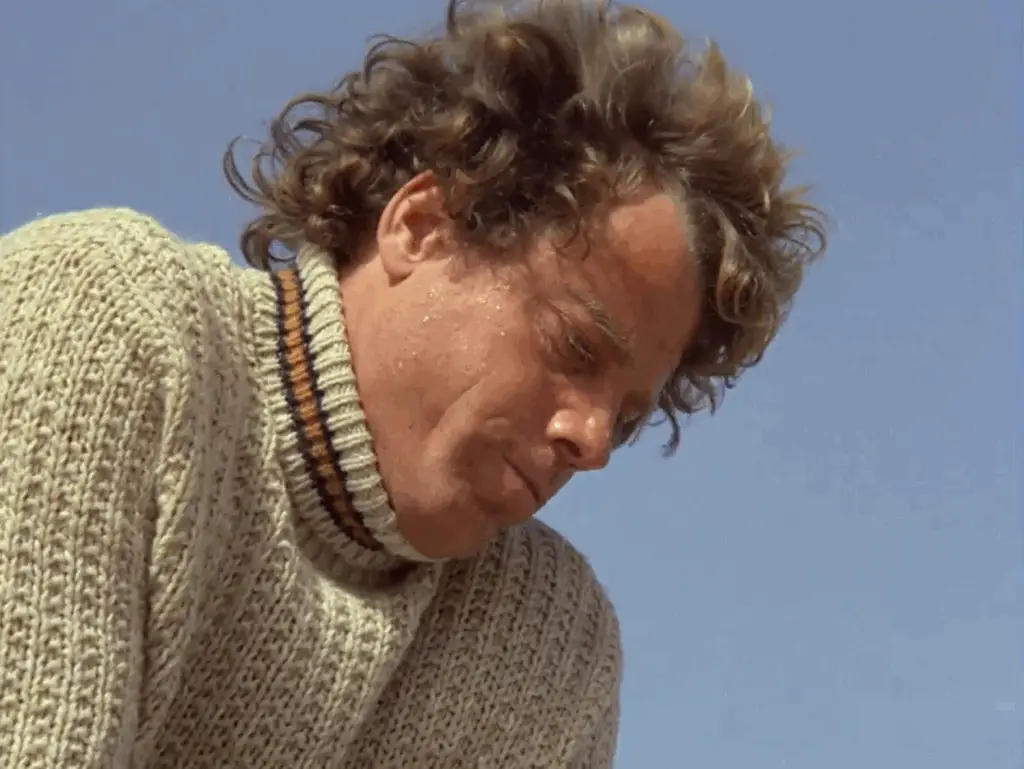

Assuming you have seen the film, though, it’s still a fairly difficult movie to write about. That’s because so much of what makes Island of Death successful is pure aesthetics. It’s not so much what happens in the film that makes it memorable/disturbing as it is how those things are presented. There are a lot of cool camera tricks throughout the movie, including a downright brilliant use of fish-eyed lenses for chase sequences and attack scenes. It’s an amazing gimmick that conveys the aggression and sadism of its main characters perfectly, turning what would otherwise by routine wide-angle shots in vast, open locations into hyper-claustrophobic moments of pure anxiety. This is a movie that smothers you and makes you feel hopelessly pinned down — for better or for worse, it makes you feel like you’re an active participant in the carnage, whether that’s as a victim or the perpetrators.
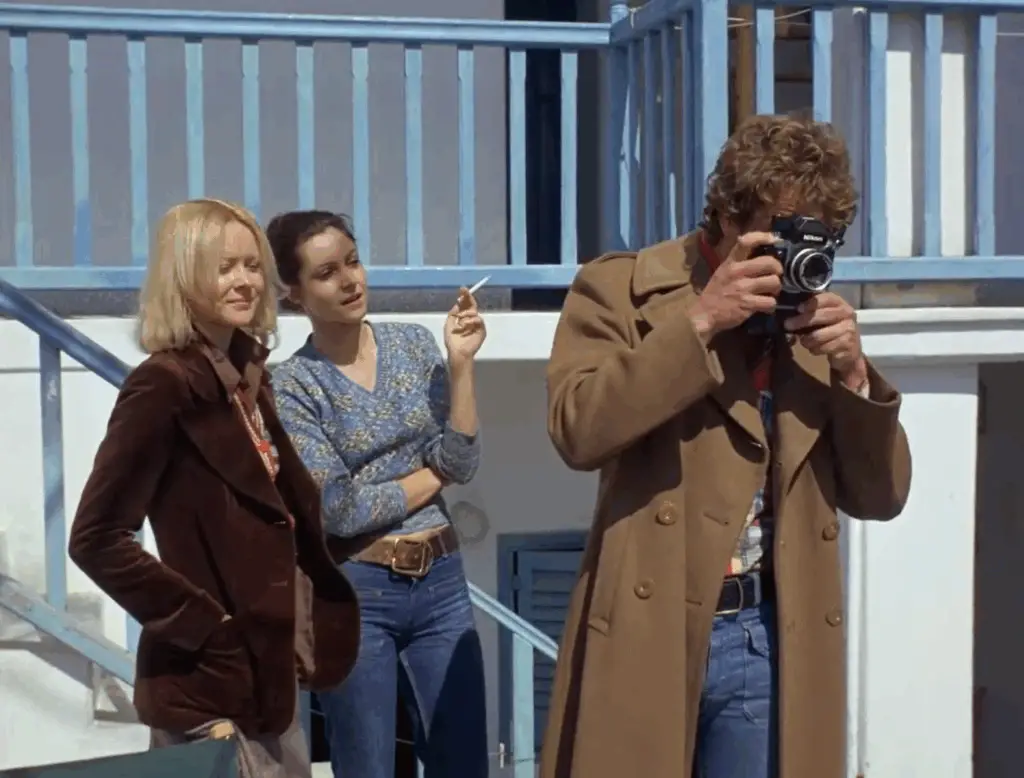
The unsung hero of the film is cinematographer Nikos Gardelis. Not only does he pull off some fancy, gimmicky shots involving simulated still photography (which is employed for virtually all of the murder sequences in the film), he does a fantastic job of making the picturesque and serene waterside hamlet in the movie feel vacant, dilapidated and slightly alien. Even in the opening shots of Island of Death you just feel like something is off about this place — it might like look something you’d see on a postcard at first, but the longer you glance at all the rust, decay and seawater-eroded infrastructure, the more you realize things aren’t what they seem here. Which, yeah, might be slightly metaphorical when you examine the film as a whole.
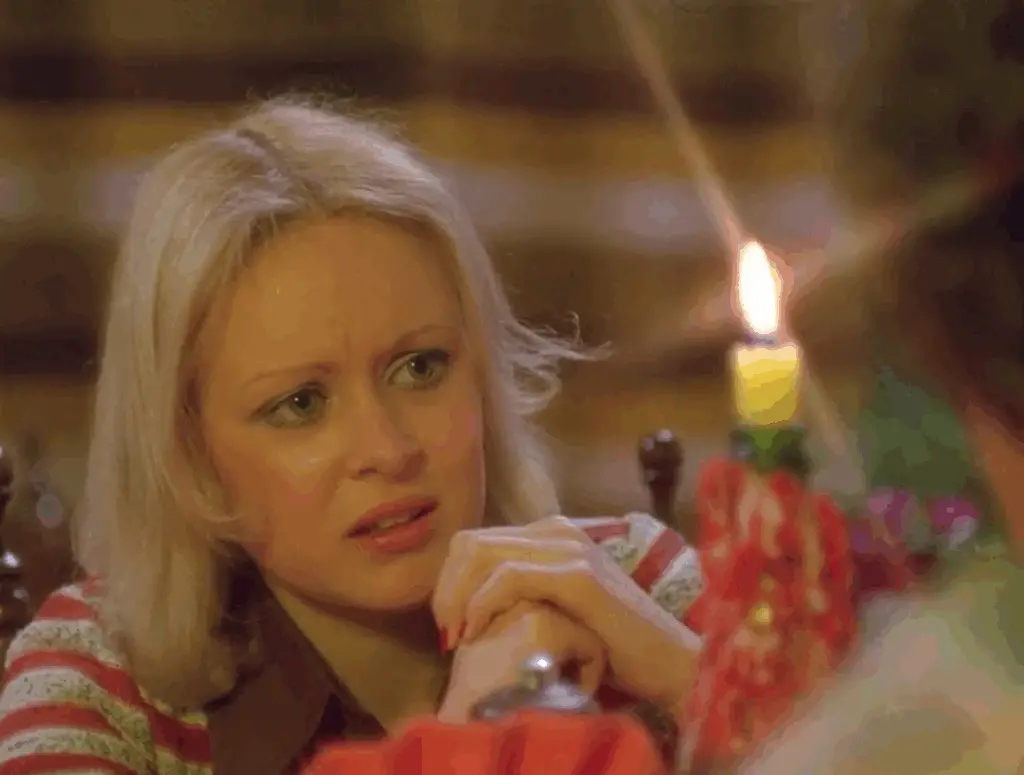
As for the “plot” of the movie, we’re quickly introduced to a young couple played by Robert Behling and Jane Lyle. They’re your usual British tourist types (despite having dubbed voices with unmistakably American accents) who enjoy sight-seeing, taking pictures and open mouth kissing in public, since it is Europe and all. The first indication that things aren’t OK with these two is when they start having sex in a phone booth — with Rob’s character calling up his mother mid-coitus to let her know just how much he’s enjoying himself. And if you were still under the impression that he might be a normal dude, the follow-up scene — involving a goat, and I’ll leave it at that — clears up that misperception immediately.
So yeah, these two are certifiable loons. But they’re not just any murderous nut cases, they’re deeply religious nut cases with a goal of killing as many “perverts” and “degenerates” as they can while they’re on vacation. It’s very ahead of its time stuff, especially considering the majority of their victims happen to be a.) homosexuals, b.) Black people and c.) sexually liberated women. The painful reality is that not only could you remake this movie today — with virtually zero changes — and have it feel extremely relevant, you can flip the TV over to CNN and see it practically play out in real time any day of the week.
Structurally the film kinda falls between traditional giallo and slasher conventions. It has elements of both types of horror film, but it doesn’t necessarily feel like it belongs to one or the other. In a weird way, probably the closest comparison point for this film would be 1973’s The Wicker Man, even though the plot here is the 180 degree inverse; this time around, it’s modernist wackos going to a “backwards,” traditionalist island culture and ruining everything for everybody.
There’s a lot more character development here than in most mid-‘70s, continental exploitation thrillers. You actually get to know the victims quite well here, as our murderous antagonists pretend to befriend them as part of their gruesome grooming rituals. Amazingly, the characterizations of marginalized groups in Island of Death — gay men, the gender non-conforming, the drug dependent, etc. — are unexpectedly multidimensional and they all come across as relatable and sympathetic. Which makes their inevitable death scenes all the harder to watch. There might be bloodier and more explicit horror films from the era, but the sheer dread and dismay created by this movie is remarkable. It’s brutally tragic stuff, at a time when most movies of its ilk were only concerned with the “brutal” part.
And the kills in Island of Death ARE nothing short of vicious. One guy is pummeled mercilessly and forced to drink paint, one woman is injected with narcotics and has her face melted off with a homemade blowtorch and there’s even a sequence where a character is beheaded by a bulldozer. Even the more “pedestrian” stabbings and shootings in the film feel so much sicker and more inhumane than most mid-seventies genre pictures. You won’t find many horror pictures from the decade as visceral as this one, and the odds of finding one as visceral AND unironically captivating as Island of Death has got to be extraordinary low.
The ending of Island of Death is what makes it a low-key transcendent genre movie. Without giving away too much, let’s just say it culminates with our two British sociopaths running into a homegrown sociopath — and just so you know, if you enter the query “lye pit” into Google, a certain character’s demise is literally the third image that pops up on the World Wide Web. Now THAT is how you know an iconic kill is genuinely iconic.
Island of Death is still a fairly obscure movie, but I get the feeling that its time for retroactive praise is due. It feels more modern than you’d expect and it actually manages to shock you with its sexual and violent content. It’s got a ton of twists and turns and on top of everything else, it’s loaded with subtext about the immorality of self-appointed moral guardians and the innate contradictions of homophobia and misogyny. And even if you don’t like it, I suspect Island of Death will stay with you a lot longer than most horror movies. There’s some real depth and nuance going on here — assuming you’re able to look past all of the spear gun murders and simulated sodomy, of course.