
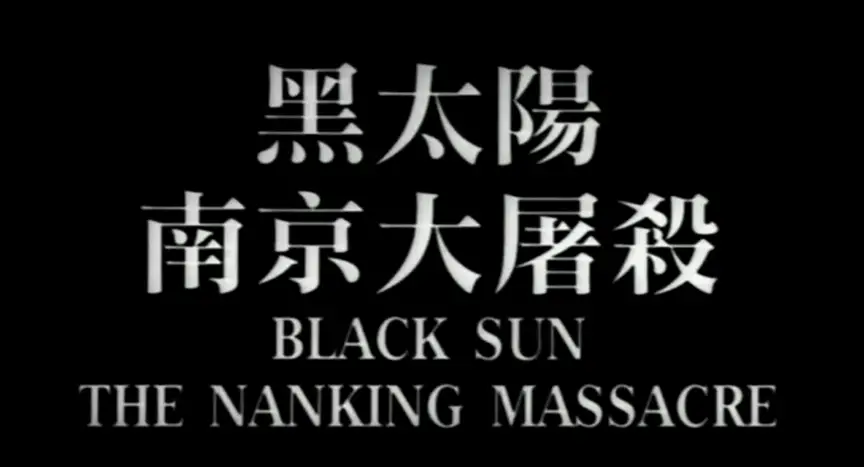
Black Sun: The Nanking Massacre puts a spotlight on one of WWII’s grimmest moments
Black Sun: The Nanking Massacre is a film that proves that no matter how fantastical, our fictitious horror movies can’t hold a candle to the grotesque, inhuman and stomach-churning violence people have actually committed in real life. With a Freddy Krueger or zombie movie, you can just say “ah, it’s all made up crap” and be done with it. But with a film like Black Sun, you CAN’T turn your head, shut your eyes and lie to yourself “it’s just something somebody invented and it’s not real.” Because the horrific scenes in Black Sun *definitely* played out in real life … and was actually FAR worse than what is depicted in the already nauseating and soul-crushing motion picture.
Black Sun: The Nanking Massacre is about a four-month period stretching from late 1937 until early spring 1938 when Imperialist Japanese troops occupied the then-capital of the Republic of China (which is also known as Nanjing, in case you were wondering.) Over the course of just a few weeks hundreds of thousands of Chinese civilians and prisoners of war were summarily executed while hundreds of thousands more were subject to borderline unfathomable torture and cruelty. What makes the Nanking Massacre so unique — and it’s a horrible term to use for something so heinous and blood-curdling, I realize — is that its atrocities were well documented, even by the Japanese occupiers themselves. This is an instance were an invading army didn’t just admit that they were committing atrocious war crimes en masse, but one in which high-ranking military commanders openly bragged about it. Tokyo newspapers gleefully reported incidents of officers competing to stab as many Chinese people to death as they could like it was the mere final score of a baseball game. And that’s just the tip of the ghoulish iceberg.
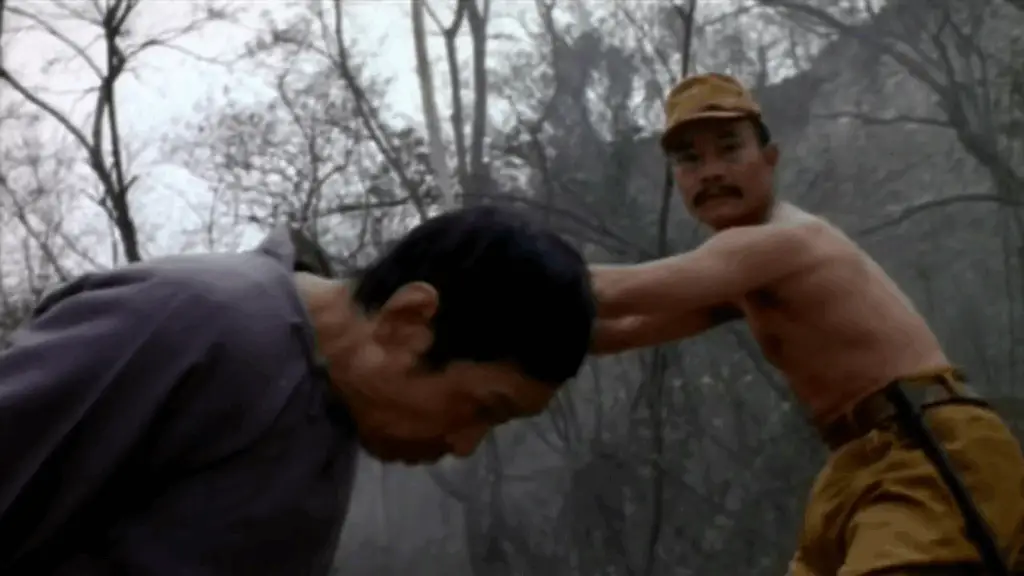

As you’d imagine, Black Sun: The Nanking Massacre is NOT an easy movie to watch. It was directed by the iconic Hong Kong exploitation filmmaker Mou Tun Fei, who is perhaps most famous for making 1988’s Men Behind The Sun, an earlier World War II horror film about the vile happenings at the notorious Unit 731 facility. Whereas Men Behind The Sun could certainly be considered unmistakable exploitation-horror shock cinema, Black Sun has a more traditional narrative that emphasizes the heavy toll warfare takes on non-combatants. Structurally, it’s closer to something like Come and See or The Grey Zone, but it’s also littered with wall to wall gore. Perhaps the most notorious scene in the film is when a soldier stabs a pregnant woman with a bayonet … then yanks the fetus out of her with the sharp end of his weapon. It’s absolutely over the top stuff, the kind of thing that’s so horrific that you almost want to say it’s impossible as an emotional defense mechanism. But that happened throughout the occupation of Nanking for real, to the point that giddy Imperialist occupiers took photos of themselves holding up skewered infants on their blades. And yes, you CAN Google the images in case you really wanted to lose faith in humanity as soon as possible.
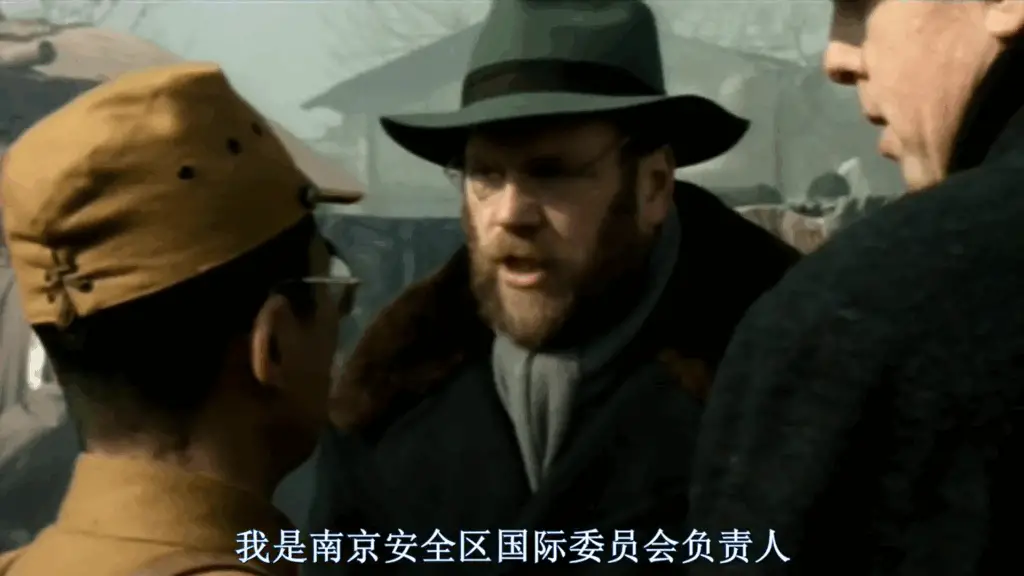
Compared to Men Behind The Sun, Black Sun is a much subtler and subdued movie. The emphasis is on a story (however iffy the acting may be, though), with the moments of bloodshed and torture there to simply bridge things together and push them forward chronologically. For what it’s worth, Black Sun does seem to be a pretty historically accurate movie, to the point it features characters obviously inspired by Minnie Vautrin and John Rabe, two individuals who saved countless lives by establishing safety zones in Nanking. By the way, Rabe was literally a German diplomat, which means Black Sun might be the ONLY movie in the history of cinema where a legitimate, bona fide Nazi is unmistakably the lesser of two evils.
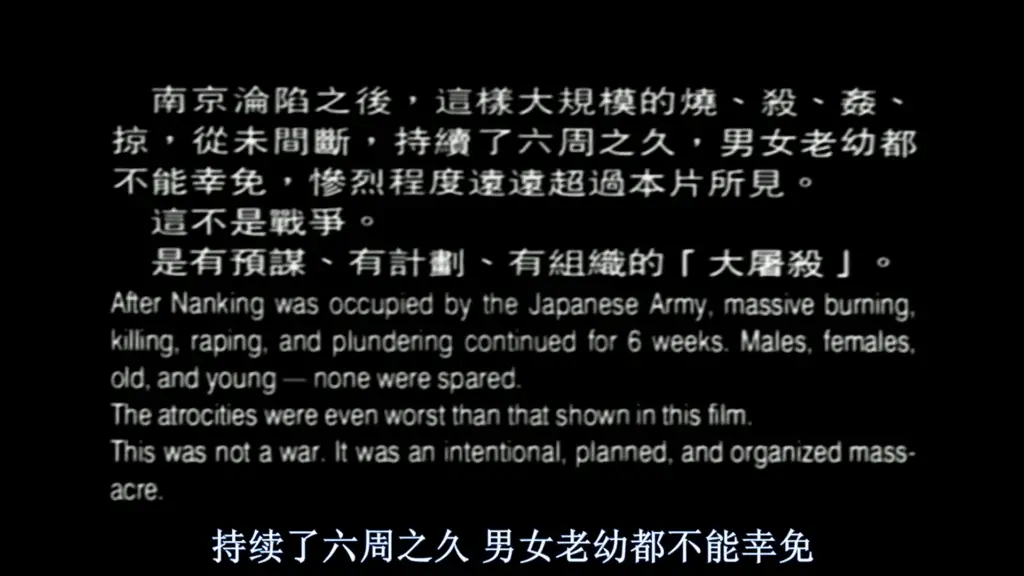
Doing a quick and dirty list of the grotesque imagery in Black Sun: The Nanking Massacre is a disservice to the film. It’s a brutal, horrifying movie, but it’s not necessarily meant to be “entertainment.” The horrors that go on in this movie are meant to reflect the real world atrocities of World War II and the film itself even admits that it dialed it down tremendously. What we encounter in this film is hideous, but it’s nowhere near as hideous as the actual massacre. If you want a full glimpse at the depravity and terror there, I’d highly recommend reading Iris Chang’s 1997 book “The Rape of Nanking: The Forgotten Holocaust of World War II.” Simply put, think of the worst things you could ever imagine and amplify it by 100.
So many horror films bombard viewers with inconsequential violence. None of the violence in Black Sun is “meant to be fun.” You see the long-lasting impacts of death, on the victims’ families, their loved ones, their children. It’s not about throwaway sadism at all; as an audience, we’re just mortified, if not petrified, by the madness of it all. Very few movies make you feel what Black Sun does — a sense of surreal despair, of being caught in an inescapable hell on earth where logic and rationality just doesn’t exist anymore. It’s a suffocating film, a film that makes you wish for an opening to emerge just so you can breathe a little. But Black Sun never affords you the opportunity. It’s just insanity layered atop insanity, to the point the all-too-real mayhem starts to feel nightmarish and hallucinatory. You really don’t want what this movie shows you to exist, but it did.
Black Sun: The Nanking Massacre is unmistakably a horror film at heart. Its point is to scare you, but in a very different way from most genre movies. I like to think of Black Sun as a cinematic tombstone, this artifact that’s there to remind you of what once was and what should never be again. The film is a very pointed warning against the ills of warfare, xenophobia and ultranationalism in general. “These horrific things happened in the past,” the film tells you, “now it’s up to you to make sure they don’t happen in the future.”
Watching Black Sun, I was hit with an epiphany; not only did what this movie warn us against happen again, it’s happening all over the planet. Ukraine, Gaza, Southeast Asia, in numerous African countries. Death and wholesale slaughter goes on every second of every day, and not only are we oblivious to it, most times were totally insensate. Their problem, not ours — four words that ensure genocide is always going to be a miserable part of the human condition.
The definition of “horror” today usually means something supernatural or, for lack of a better term, serial killery. Black Sun, though, is a rare horror movie that shows us a glimpse at true horror, the real horror that exists in our own realities that we can’t hide from or run away from. It’s disturbing, it’s unnerving and it will likely leave you feeling a little dead on the inside. And surely, that was the director’s intent all along. Jason Voorhees, Pennywise, Chucky, and all those goofs underneath the Ghostface masks? They all pale in comparison to the villain of Black Sun — humanity itself.
